The Coast as Exception — Tuesday, May 26, 2026
The Coast as Exception
How North Carolina's 20 coastal counties became a different state for lobbying purposes. Six chapters on the lobbying field of the North Carolina coast — and the registry that's organized around defending its exceptions.
The Coast in Four Numbers
A different legal regime, a thin registry, one enacted reform, and a 2026 short-session bill list that keeps the work alive.
Six Chapters on the Coastal Lobby
How the coast got its own rulebook — and the names that work it.
- 01I. The Coastal Exception — CAMA, the Coastal Resources Commission, and the rulebook that stops at the coastal line.
- 02II. Sand and Storm — beach nourishment, dredging, ReBuild NC, and the recovery industry that became permanent.
- 03III. The Insurance Cliff — NCIUA, the Beach Plan, the federal flood overlay, and the two-name dual book on both sides of the coin.
- 04IV. Three Coasts, One Registry — Outer Banks, Albemarle/Pamlico, the Crystal Coast, the Southeast Beaches.
- 05V. Working Water — fisheries, ferries, ports, and the commercial coast.
- 06VI. After the Storm — storms as statutes, the flood-zone map, and the 2026 short-session watchlist.
The Coast Plays By Its Own Rulebook
The coast is not a region the rest of the state lightly touches. It is a separate regulatory and fiscal regime — and the lobbying registry is built around it.
The Twenty Counties Where the Rules Are Different
The 1974 Coastal Area Management Act drew a line around twenty counties and gave the Coastal Resources Commission rulemaking authority inside it.
- 01→BeaufortPamlico Sound interior · zero registered lobbyists
- 02→BertieAlbemarle Sound interior · Stancil-Steinburg bloc
- 03→BrunswickSoutheast beaches · zero registered lobbyists despite the size
- 04→CamdenAlbemarle Sound · Stancil-Steinburg bloc
- 05→CarteretCrystal Coast · Morehead City port · NCWF land action
- 06ChowanAlbemarle Sound · no registered state lobbyist
- 07→CravenPamlico / Neuse confluence · tied for the heaviest-lobbied coastal county
- 08→CurrituckOuter Banks · Ward and Smith team
- 09→DareOuter Banks · McGuireWoods Consulting team
- 10→GatesAlbemarle Sound interior · Stancil-Steinburg bloc
- 11→HertfordAlbemarle Sound interior · Stancil-Steinburg bloc
- 12→HydePamlico Sound · ferry-served · Steinburg solo
- 13→New HanoverWilmington urban anchor · tied for the heaviest-lobbied coastal county
- 14→OnslowCamp Lejeune coast · Harrell independent
- 15→PamlicoPamlico Sound · ferry-served · Ward and Smith
- 16→PasquotankAlbemarle Sound · Elizabeth City · Stancil solo
- 17→PenderTopsail Island coast · Maynard Nexsen
- 18→PerquimansAlbemarle Sound · Stancil-Steinburg bloc
- 19→TyrrellPamlico Sound interior · zero registered lobbyists
- 20→WashingtonAlbemarle Sound interior · zero registered lobbyists
Six Rules That Stop at the Coastal Line
The exceptions that organize the coastal lobbying field. Each is a standing lobbying constituency.
- 01CAMA permits and AEC rules — the Coastal Resources Commission writes the permit regime inside the twenty counties; Areas of Environmental Concern carry their own use standards.
- 02The Beach Plan — the North Carolina Insurance Underwriting Association is the residual wind-and-hail market for coastal property the standard market will not write.
- 03Beach nourishment funding formulas — state matching dollars plus a USACE federal share keep the sand-pumping cycle on a multi-year clock.
- 04The school calendar late-start carveout — coastal tourism districts retain authority to start school later than the statewide August calendar requires.
The Coast Got Its Own School Calendar
N.C. Gen. Stat. § 115C-84.2 requires a late-August start for most districts — and a generation of coastal lobbying has worked the exceptions that protect the summer season. SB 754 and SB 103 are the current vehicles, both held in Rules.
- 01The constituency — coastal chambers of commerce, the North Carolina Travel Industry Association, the NC Travel and Tourism Coalition, and the vacation-rental industry have carried the school-calendar fight for two decades.
- 02The lobbyists on the file — Skye David and Brian M. Lewis carry the NC Travel Industry Association book; B. Davis Horne, Dana E. Simpson, and Raymond G. Waugh anchor the NC Travel and Tourism Coalition.
- 03What the carveouts do — they preserve the post-Labor-Day calendar window that the coastal beach economy depends on. Hourly summer payroll, vacation-rental turnover, and tax-collection cycles all run on the same clock.
- 04The 2026 short-session vehicles — SB 754 (Calendar Flexibility/Local Boards of Education) and SB 103 (School Calendar Flexibility/All LEAs) sit in the Senate Rules committee at edition close.
Who Decides What "Coastal" Means
The Coastal Resources Commission is appointed, not elected — and its rules carry the force of law inside the twenty-county jurisdiction. The lobbying activity around CRC rulemaking and appointments mirrors General Assembly lobbying: same firms, same rosters, different forum.
- 01How it is composed — thirteen members under N.C. Gen. Stat. § 113A-104, split across gubernatorial and legislative-leadership appointments with coastal-resident, scientific, and at-large seats.
- 02What it does — writes and amends CAMA rules. Designates Areas of Environmental Concern. Hears permit appeals. Adopts use standards that bind local CAMA permit officers.
- 03Who works it — the same firms that carry coastal-LGU books: Maynard Nexsen (David P. Ferrell, Clark D. Riemer) on Pender, Topsail Shoreline, and the Wilmington Urban Area MPO; Ward and Smith (Whitney Campbell Christensen, James W. Norment, Marley Peterson, Douglas Carmichael McIntyre) on the southern arc.
The public record of NC lobbying.
- Weekly editions
- Daily feed
- Search-indexed roster
The coast has a lobby. We map it.
Daily NC Secretary of State registrations, indexed by county, sub-region, firm, and bill. Search every lobbyist, every principal, every appearance.
- Inline · Editions issue rotation
- Sidebar · Feed and search results
- Footer · Newsletter & profile pages
- Custom · Sponsored series and briefs
The Money Follows the Damage
Beach nourishment, dredging, and disaster recovery are the infrastructure of the coastal economy. The cycle — sand in, sand out, sand back; storm, mobilization, reconstruction, audit — has produced its own standing lobbying constituency.
Why the Sand Has to Keep Coming Back
Every major coastal town runs a beach-nourishment cycle on a multi-year clock. But most do not carry their own state lobbyist — the advocacy runs through county vehicles and regional commissions.
- 01Direct municipal registrations — on the 2026-05-21 snapshot, only two coastal towns carry direct state-lobbyist registrations: Town of Surf City (Whitney Campbell Christensen, Ward and Smith) and Village of Bald Head Island (Drew Moretz, Brooks Pierce).
- 02Where the rest of the advocacy lives — Carolina Beach, Kure Beach, Holden Beach, Ocean Isle Beach, Sunset Beach, Atlantic Beach, Emerald Isle, Oak Island. None of them carry a current state-level registration. The work runs through county and regional vehicles.
- 03The regional commission vehicle — the Topsail Island Shoreline Protection Commission (David P. Ferrell, Clark D. Riemer at Maynard Nexsen) carries the cross-jurisdiction nourishment book; the Wilmington Urban Area MPO carries the southeast transportation/coordination book with the same team.
- 04The county vehicle — Pender County (Ferrell, Riemer) covers Topsail. New Hanover County (Christensen, McIntyre, Tom H. Fetzer, Susan Fetzer Vick) covers the southern arc. The work is bloc work, not town-by-town work.
The Inlets That Must Stay Open
Navigable inlets along the coast require continuous dredging to stay open for commercial and recreational use. The work is federally administered through the U.S. Army Corps but politically maintained at the state level — through coalitions, not dedicated registrants.
- 01The constituency is heterogeneous — commercial fishing fleets, ferry operators, recreational boating, marina operators, and the state port complex all depend on inlet maintenance. The registry does not surface a dedicated dredging principal.
- 02Where it surfaces in the registry — the National Marine Manufacturers Association (James Allen Perry) carries the recreational-marine constituency. The NC Travel and Tourism Coalition (B. Davis Horne, Dana E. Simpson, Mike R. Weishaar) sits in the tourism-dependent waterway space.
- 03The ferry-served counties — Hyde (1 registered lobbyist), Pamlico (2), Currituck (2). Tyrrell, Washington, Beaufort — zero. The ferry-dependence is real; the registered footprint is not.
- 04A data note — the recon for this edition did not surface a dedicated dredging principal in the NC registry. The constituency is real; the lobbying footprint is via coalition and host-county vehicles.
After Every Storm, the Same Firms Show Up
Six pure-play recovery and resilience principals are registered to lobby NC government as of 2026-05-21. The storm economy now has its own permanent lobby.
- 01→Tidal Basin Holdco LLCHampton Michael Billips, John Carry Easterling, Nelson Freeman — Checkmate Government Relations.
- 02→AECOMThomas Moore — global engineering and recovery services.
- 03→Lemoine Disaster Recovery, LLCSharon Martin.
- 04→Recovery Logistics, LLCAndrew T. Heath.
- 05→RecSol Recovery Solutions, LLCFranklin Freeman.
- 06→American Flood Coalition Action, Inc.Tony McEwen — the federal-flood policy vehicle.
Which Coastal Jurisdictions Lobby Hardest
Registered lobbyist count by CAMA-county government, 2026-05-21. The same lobbyist may appear across multiple counties.
- 01Craven County4 lobbyists
- 02New Hanover County4 lobbyists
- 03Currituck County2 lobbyists
- 04Dare County2 lobbyists
- 05Pamlico County2 lobbyists
- 06Pender County2 lobbyists
- 07Bertie County2 lobbyists
- 08Camden County2 lobbyists
- 09Carteret County2 lobbyists
- 10Gates County2 lobbyists
- 11Hertford County2 lobbyists
- 12Perquimans County2 lobbyists
- 13Hyde County1 lobbyists
- 14Onslow County1 lobbyists
- 15Pasquotank County1 lobbyists
The public record of NC lobbying.
- Weekly editions
- Daily feed
- Search-indexed roster
Every coastal bill. Every coastal lobbyist.
Filter the 2025-2026 NC General Assembly session to coastal bills. Cross-reference sponsors, lobbyists, and principals.
- Inline · Editions issue rotation
- Sidebar · Feed and search results
- Footer · Newsletter & profile pages
- Custom · Sponsored series and briefs
Who Pays to Live on the Coast
Wind, hail, flood, the Beach Plan, and the federal flood overlay sit on every coastal property transaction. The lobbying registry is where the answer gets negotiated — and one Raleigh firm holds both sides of the coin.
The Beach Plan
The North Carolina Insurance Underwriting Association is the residual property insurance market for coastal NC — covering the wind and hail exposure that private insurers will not write. Statutorily mandated, industry-funded, and politically central to every coastal property transaction.
- 01→Madison AlligoodAlso carries the Insurance Federation of NC and American Integrity Insurance.
- 02→John A. HardinThe Raleigh Group. Six coastal clients in total. Also on Insurance Federation of NC, The Nature Conservancy, The Pew Charitable Trusts, EDF Action.
- 03→William MorganThe Raleigh Group. Six coastal clients in total. Also on Insurance Federation of NC and the same three conservation organizations as Hardin.
- 04→James Allen PerryAlso carries the National Marine Manufacturers Association and the Insurance Federation of NC.
John A. Hardin and William Morgan: The Dual Book
Two lobbyists at The Raleigh Group hold both the insurance industry book and the conservation book on the coast. The registry is the news; no motive is implied.
- John A. Hardin · The Raleigh Group
- William Morgan · The Raleigh Group
- NCIUA (the Beach Plan)
- Insurance Federation of NC
- American Integrity Insurance
Who Writes the Wind and Flood Coverage
The bloc that negotiates rate-setting and coverage-mandate fights in Raleigh. Counts are registered lobbyists per principal, 2026-05-21.
- 01→Nationwide Mutual Insurance · 6Sarah Amanda Bales, Harold Brubaker, Joshua Grant, B. Davis Horne, Dana E. Simpson, Raymond G. Waugh.
- 02→NCIUA · 4Madison Alligood, John A. Hardin, William Morgan, James Allen Perry.
- 03→Insurance Federation of NC · 4Alligood, Hardin, Morgan, Sue Ann Swift.
- 04→Liberty Mutual · 3Baum, Hickman, Peterson.
- 05→APCIA · 2Andrew T. Heath, George M. Teague.
- 06→American Integrity Insurance · 2Madison Alligood, John A. Hardin.
- 07→First Benefits Insurance Mutual · 2Andy Ellen, Elizabeth Robinson.
- 08→NAMIC · 1Rotunno.
- 09→State Farm Insurance Companies · 1Tracy W. Kimbrell.
FEMA, NFIP, and the Flood-Zone Map
National Flood Insurance Program coverage and FEMA flood-zone designations sit on top of every coastal property transaction. State-level advocacy is for federal rate relief and mapping appeals; engineering firms work both sides.
- 01The registered vehicle — American Flood Coalition Action, Inc. (Tony McEwen) is the only registered NFIP-adjacent advocacy principal in the current snapshot.
- 02The Risk Rating 2.0 backdrop — FEMA's Risk Rating 2.0 reset broke long-standing premium expectations on the coast. The fallout is now permanent state-level advocacy territory.
- 03The engineering firms — HDR Engineering of the Carolinas (Ferrell, Riemer at Maynard Nexsen) and Colliers Engineering & Design (Renfer, Shumate) work coastal-resilience adjacent: flood-zone amendments, mapping appeals, and county-level disputes.
- 04The county-level venue — most flood-zone fights are won or lost at the county-mapping-appeal level, not in Raleigh, which is part of why the registered NFIP footprint is so thin.
Trafton Dinwiddie and Dylan Reel: The Conservation Triangle
Two lobbyists carry the same three coastal-conservation books — the Hardin/Morgan slide in mirror. Three organizations, two names on each.
- Trafton Dinwiddie
- Dylan Reel
- Kerri Allen
- Braxton Davis
- Trafton Dinwiddie
- Rob Lamme
- Todd Miller
- Dylan Reel
- Lela Schlenker
- Thomas Bell
- Trafton Dinwiddie
- Dylan Frick
- Manley Fuller
- Anna Scott Marsh
- Story Oliver
- Dylan Reel
The public record of NC lobbying.
- Weekly editions
- Daily feed
- Search-indexed roster
Two books, one firm.
See every cross-shop in the registry — when the same lobbyist works both sides of an issue, Lapel surfaces it.
- Inline · Editions issue rotation
- Sidebar · Feed and search results
- Footer · Newsletter & profile pages
- Custom · Sponsored series and briefs
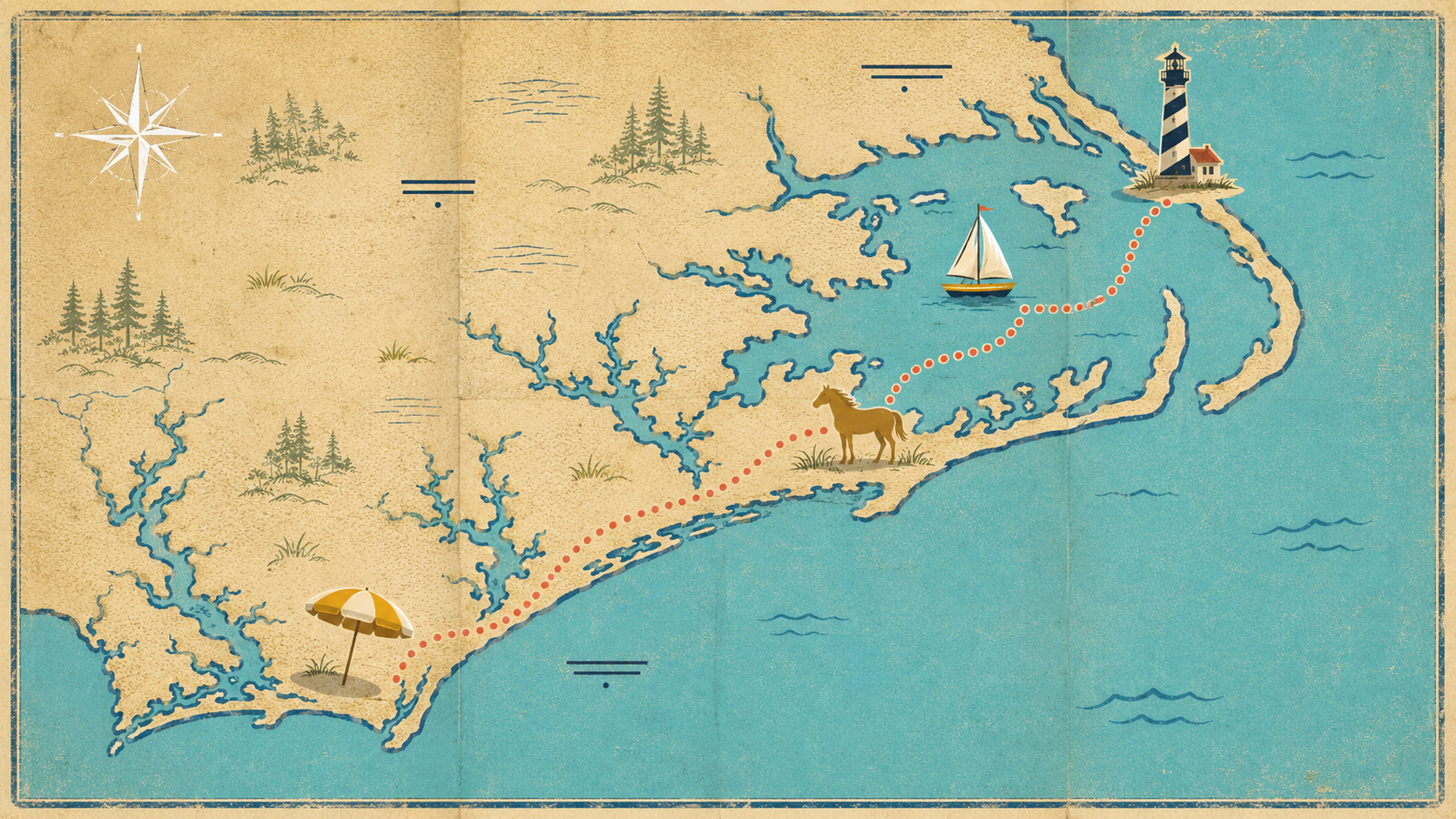
Four Sub-Regions, One Shared Registry
The Outer Banks, the Albemarle and Pamlico interior, the Crystal Coast, the Southeast Beaches. Four geographically distinct sub-regions. Four lobbying postures. One shared registry that produces visible regional blocs.
Dare, Currituck, Hyde
Tourism-dependent counties on the barrier-island arc, ferry-served and toll-debated at the extremes. Small in population, high in lobbying intensity per capita.
- 01Dare County — two registered lobbyists: Harrison J. Kaplan and Johnny L. Tillett at McGuireWoods Consulting.
- 02Currituck County — two registered lobbyists: Whitney Campbell Christensen and Marley Peterson at Ward and Smith.
- 03Hyde County — one registered lobbyist: Robert C. Steinburg, independent.
- 04The Outer Banks towns — no registered municipal-level lobbying surfaces for the OBX towns in the current snapshot. Town of Nags Head appears via Christensen at the muni-footnote level.
The Albemarle and Pamlico Counties
The historic northeastern coastal plain. The towns of Edenton and Elizabeth City. And a striking pattern of registry absence on the Albemarle arc.
- 01The Stancil-Steinburg bloc — Bertie, Camden, Gates, Hertford, Perquimans, five counties carrying the same two-lobbyist pairing. Add Pasquotank for Stancil and Hyde for Steinburg.
- 02The bloc towns — Town of Edenton and City of Elizabeth City are also served by the same bloc.
- 03Zero current registrations — four CAMA counties on the same arc have no registered state lobbyist: Chowan, Tyrrell, Washington, Beaufort.
- 04Pamlico is the exception — Pamlico County runs through a different team: Whitney Campbell Christensen and James W. Norment at Ward and Smith.
Stancil and Steinburg: The Northeast Coastal Bloc
Two names carry almost the entire northeastern coastal book. Steinburg leads at eight coastal clients; Stancil at seven. The registry posture is itself the news; no motive is implied.
- Bertie County
- Camden County
- Gates County
- Hertford County
- Perquimans County
- Town of Edenton
- Bertie County
- Camden County
- Gates County
- Hertford County
- Hyde County
- Perquimans County
- City of Elizabeth City
- Town of Edenton
- Bertie County
- Camden County
- Gates County
- Hertford County
- Pasquotank County
- Perquimans County
- Town of Edenton
Carteret, Onslow, Pamlico
A central-coast sub-region anchored by conservation, the military, and the Morehead City port.
- 01Carteret County — two registered lobbyists: Philip Isley and Zane B. Stilwell. Hosts Morehead City, one of two state-owned deepwater ports, and the NC Wildlife Federation's 2026 land-conservation action.
- 02Onslow County — one registered lobbyist: James A. Harrell, independent. Camp Lejeune dominates the county economy; military-adjacent advocacy runs through statewide coalitions, not county registrations.
- 03Pamlico County — two registered lobbyists: Whitney Campbell Christensen and James W. Norment at Ward and Smith. Ferry-served, with the most pronounced ferry-tolling exposure of any CAMA county in the bloc.
New Hanover, Brunswick, Pender
Wilmington as the urban anchor. Carolina Beach, Kure, and Wrightsville as the southern beach economy. The Brunswick chain. The Topsail Island arc.
- 01New Hanover County — four registered lobbyists: Whitney Campbell Christensen, Tom H. Fetzer, Douglas Carmichael McIntyre, Susan Fetzer Vick. Tied with Craven as the heaviest-lobbied coastal county.
- 02Pender County — two registered lobbyists: David P. Ferrell and Clark D. Riemer at Maynard Nexsen. The same team also carries Topsail Shoreline and the Wilmington Urban Area MPO.
- 03Wilmington-anchored vehicles — Wilmington International Airport (ILM) and Wilmington Regional Film Commission both run through Fetzer and Vick. The MPO runs through Ferrell and Riemer.
- 04Village of Bald Head Island — Drew Moretz at Brooks Pierce, one of only two coastal towns with direct state registrations.
The public record of NC lobbying.
- Weekly editions
- Daily feed
- Search-indexed roster
Find the counties the registry forgot.
Lapel surfaces zero-lobbyist counties, lobbyist-bloc patterns, and the shared firms behind every regional posture.
- Inline · Editions issue rotation
- Sidebar · Feed and search results
- Footer · Newsletter & profile pages
- Custom · Sponsored series and briefs
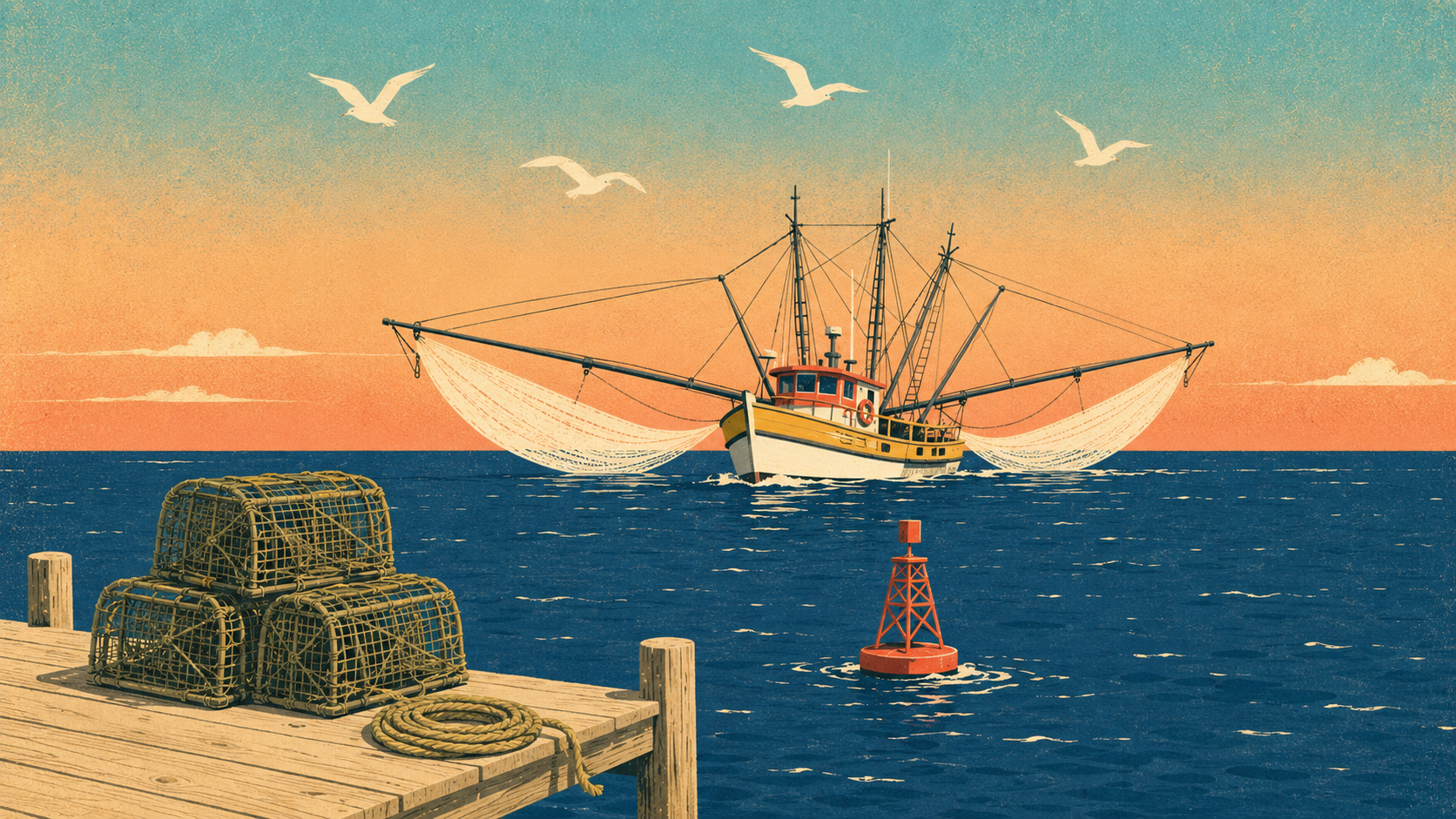
The Commercial Coast
Fisheries, ferries, ports — a distinct lobbying constituency from the tourist coast, with its own legislative priorities and its own thin registry. Small in headcount; large in legislative stakes.
Who Speaks for the Shrimp Boats
Two industry principals carry the commercial fishing fight. NC Watermen United does not appear in the current registry. The thinness is the story.
- 01NC Fisheries Association — three registered lobbyists: Logan T. Martin, John C. Skinner, Emma Vick.
- 02NC Blue Crab Association — three registered lobbyists: Hampton Michael Billips, Kendall Conger, Nelson Freeman at Checkmate Government Relations.
- 04The recreational-marine adjacency — National Marine Manufacturers Association (James Allen Perry) carries the recreational-marine constituency in the same policy room.
Where Fishing Rules Get Made
The Marine Fisheries Commission is appointed, like the Coastal Resources Commission. Its rules govern commercial and recreational fishing in NC waters — and the shrimp-trawl fight sits inside its rulemaking authority before it ever reaches the legislature.
- 01How it is composed — nine members under N.C. Gen. Stat. § 143B-289.54, gubernatorial appointment with Senate confirmation, three-year terms with seat allocations across commercial, recreational, scientific, and at-large categories.
- 02What it does — adopts rules on seasons, gear, catch limits, and area closures. Issues moratoria when warranted. The legislature periodically constrains its rulemaking by statute, which is what the 2026 moratorium bills attempt.
- 03Who works it — NC Fisheries Association on the industry side. NC Coastal Federation and NC Wildlife Federation on the conservation side. The same two cross-cutters, Trafton Dinwiddie and Dylan Reel, appear on both NCCF and NCWF.
- 04A data note — named MFC appointees and committee chairs are not in the lobbying registry; they appear in the Governor's appointee records. The relevant fact for this edition is who lobbies the commission, not who sits on it.
Two Ports, Two Economies
Wilmington (container, breakbulk) and Morehead City (bulk, project cargo). Both state-owned through the NC State Ports Authority. Both politically distinct, with their lobbying footprints carried at the host-county level.
- 01Port of Wilmington — container and breakbulk. Sits inside New Hanover County's four-lobbyist footprint. The Wilmington Urban Area MPO (David P. Ferrell, Clark D. Riemer at Maynard Nexsen) carries the regional coordination vehicle in the registry.
- 02Port of Morehead City — bulk and project cargo. Sits inside Carteret County's two-lobbyist footprint. Anchors the central-coast industrial economy.
- 03NC State Ports Authority — the state-owned authority that operates both terminals does not appear as a registered principal in the current snapshot. The political weight of the ports runs through their host counties and the regional vehicles already in the registry.
- 04The adjacent transport vehicles — CSX Transportation (registered) and the Highway 17 Transportation Association serve the port-corridor logistics chain, recurring backbone for the working-water lobby.
Who Carries the Most Coastal Clients
Lobbyists with three or more coastal clients across LGU, conservation, fishing, development, recovery, and insurance — 2026-05-21. The top ten are charted; five more carry three coastal clients each.
- 01Robert C. Steinburg8 coastal clients
- 02Jackson Stancil7 coastal clients
- 03John A. Hardin6 coastal clients
- 04William Morgan6 coastal clients
- 05Whitney Campbell Christensen5 coastal clients
- 06Hampton Michael Billips4 coastal clients
- 07David P. Ferrell4 coastal clients
- 08Nelson Freeman4 coastal clients
- 09James Allen Perry4 coastal clients
- 10Clark D. Riemer4 coastal clients
The public record of NC lobbying.
- Weekly editions
- Daily feed
- Search-indexed roster
The coastal specialists, indexed.
Every lobbyist with a coastal book. Every principal they carry. Every cross-shop and bloc.
- Inline · Editions issue rotation
- Sidebar · Feed and search results
- Footer · Newsletter & profile pages
- Custom · Sponsored series and briefs

The Long Tail of Every Major Hurricane
Recovery industry, insurance reform, infrastructure resilience, and flood-zone mapping become durable mandates. Storm history becomes policy timeline. The lobbying field outlives the weather event.
The Storms That Became Statutes
Five storms, five policy legacies.
- 01Floyd (1999) — federal floodplain buyouts, the NC Floodplain Mapping Program, and the formation of a State Disaster Recovery Office. The first storm to produce a durable state apparatus.
- 02Isabel (2003) — cut a new inlet through Hatteras Island. Re-opened the federal coastal-erosion debate and reshaped CAMA development standards in inlet-hazard areas.
- 03Matthew (2016) — origin of the NC Office of Recovery and Resiliency, what would become ReBuild NC. The state professionalized hurricane recovery as a standing function.
- 04Florence (2018) — Hurricane Florence Disaster Recovery Act expanded NCORR's scope and the CDBG-DR mandate. The inflection point for the modern recovery industry.
- 05Helene (2024) — primarily western North Carolina. Consumed recovery-program attention statewide; the coastal carryover is the recovery-industry posture, not direct coastal damage.
Why Map Lines Are Worth Lobbying Over
FEMA flood-zone maps determine insurance rates, building requirements, and property values. The county-level mapping appeals process is the operative venue. Engineering firms work both sides.
- 01The registered vehicle — American Flood Coalition Action, Inc. (Tony McEwen) is the closest registered advocacy principal in the federal-flood policy space.
- 02The engineering firms — HDR Engineering of the Carolinas (David P. Ferrell, Clark D. Riemer at Maynard Nexsen) and Colliers Engineering & Design (Renfer, Shumate) work coastal-resilience adjacent: mapping appeals and amendment requests at the county level.
- 03Where the fights actually happen — most flood-zone disputes are settled at the county mapping-appeal level, not in Raleigh. The registry footprint is thin because the venue is wrong; the work is real.
- 04The Risk Rating 2.0 backdrop — FEMA's Risk Rating 2.0 reset broke long-standing premium expectations on the coast. Premium-shock politics now sit on every coastal property transaction.
The Bills That Will Shape the Coast
Five bills with motion in the 2026 short session. Ordered by consequentiality.
- 01SB 1001 · Coastal Regulatory ReformSponsor: Senator Lazzara (R). Referred to Rules 2026-05-04. The reprise of SL 2025-48 — the signal that 2025's coastal regulatory work is not finished.
- 02SB 1008 · Pilot for Shoreline Stabilization ProjectsSponsors: Brinson, Hanig, Lazzara, Moffitt, Sanderson (R). Referred to Rules 2026-05-04. A pilot vehicle for stabilization permitting.
- 03HB 1187 · Save Our BeachesSponsors: Butler, Greenfield, Harrison (D). Introduced 2026-05-05. The Democratic-coalition beach-protection package.
- 05SB 902 / HB 1094 · Ferry Division Performance AuditLazzara, McInnis, Rabon, Sawyer (R) in the Senate; Iler (R) in the House. The 2026 vehicles in the durable ferry-tolling fight.
About this edition
Source data is active NC Secretary of State lobbying registrations as of the 2026-05-21 daily snapshot. The CAMA-20 framing is the editorial choice; bills data is from the 2025-2026 NC General Assembly session as syndicated through Lapel's bills feed.
Two caveats called out explicitly. First, the registry snapshot history extends back only to 2026-03-11. No quantitative pre-2026 trend claims about lobbyist counts appear in this edition. Second, the bills database covers the 2025-2026 session, so pre-2025 session laws referenced in the narrative chapters are sourced from public records outside the database.
Lobbyist registry: NC Secretary of State, daily_snapshot_rows view, snapshot date 2026-05-21.
Bills feed: NC General Assembly 2025-2026 session, syndicated through Lapel.
CAMA jurisdiction: N.C. Gen. Stat. § 113A-103(2). Coastal Resources Commission composition per § 113A-104. Marine Fisheries Commission composition per § 143B-289.54.
Additional short-session entries: SB 734 (Clarifying Estuarine Waters AEC Under CAMA, Lazzara/Sanderson, R); SB 754 and SB 103 (school calendar flexibility); broader §4.8 backlog detailed in docs/edition-6/RECON_v1.md.
NCWF Carteret County action: Treated qualitatively. Precise acreage figure reserved for press-release confirmation.
Recon trail: docs/edition-6/RECON_v1.md and docs/edition-6/SEED.md.
The public record of NC lobbying.
- Weekly editions
- Daily feed
- Search-indexed roster
Track every move. Know every player.
Search lobbyists, track clients, follow the influence — every day of the legislative cycle.
- Inline · Editions issue rotation
- Sidebar · Feed and search results
- Footer · Newsletter & profile pages
- Custom · Sponsored series and briefs